
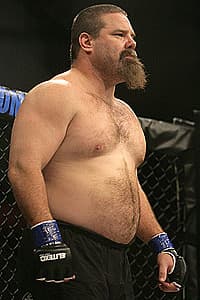
David Abbott
Nickname“Tank”
Record
Streak
L1
Age
Date of birth
- Fighting out of
- Huntington Beach, California
- Born
- United States
- Weight class
- Heavyweight
- Height
- 6'0" · 183 cm
- Stance
- Switch
- Last fight
- Nov 21, 2003
- Cut risk
- 94%
UFC fight history
ResultOpponentMethodDetailEvent
L
Heavyweight · Submission · Arm Triangle From Mount · R1 · 1:59
UFC 43: Meltdown · Jun 6, 2003
Submission
R1 · 1:59
Arm Triangle From Mount
L
Heavyweight · Submission · Toe Hold From Bottom · R1 · 0:46
UFC 41: Onslaught · Feb 28, 2003
Submission
R1 · 0:46
Toe Hold From Bottom
L
Heavyweight · KO/TKO · Punch to Head At Distance · R1 · 8:07
UFC - Ultimate Brazil · Oct 16, 1998
KO/TKO
R1 · 8:07
Punch to Head At Distance
W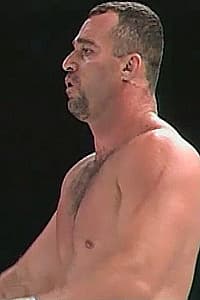
Heavyweight · KO/TKO · Punches to Head On Ground · R1 · 0:43
UFC 17: Redemption · May 15, 1998
KO/TKO
R1 · 0:43
Punches to Head On Ground
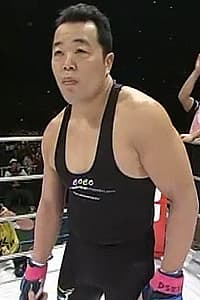
L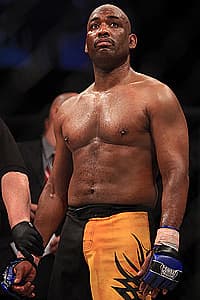
Maurice SmithTitle
Heavyweight · Submission · Other Fatigue · R1 · 8:08UFC 15: Collision Course · Oct 17, 1997
Submission
R1 · 8:08
Other Fatigue
L
Heavyweight · KO/TKO · Punches to Head On Ground · R1 · 0:52
UFC 13: The Ultimate Force · May 30, 1997
KO/TKO
R1 · 0:52
Punches to Head On Ground
W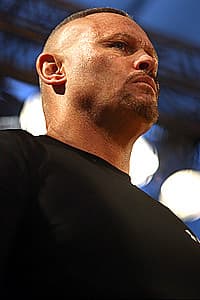
Open Weight · KO/TKO · Punches to Head From Guard Submission to Strikes · R1 · 2:51
UFC - Ultimate Ultimate '96 · Dec 7, 1996
KO/TKO
R1 · 2:51
Punches to Head From Guard Submission to Strikes
L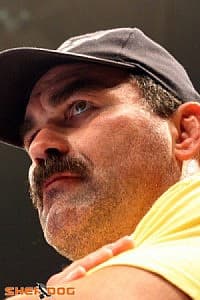
Don FryeTitle
Open Weight · Submission · Rear Naked Choke · R1 · 1:22UFC - Ultimate Ultimate '96 · Dec 7, 1996
Submission
R1 · 1:22
Rear Naked Choke
W
SN
Open Weight · KO/TKO · Punch to Head In Clinch · R1 · 1:03
UFC - Ultimate Ultimate '96 · Dec 7, 1996
KO/TKO
R1 · 1:03
Punch to Head In Clinch
L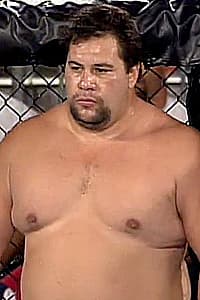
Open Weight · Decision · Unanimous · R2 · 3:00
UFC 11: The Proving Ground · Sep 20, 1996
Decision
R2 · 3:00
Unanimous
W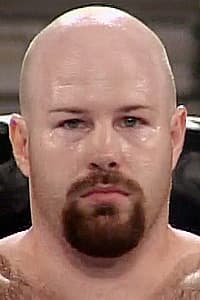
Open Weight · Submission · Forearm Choke From Half Guard · R1 · 2:06
UFC 11: The Proving Ground · Sep 20, 1996
Submission
R1 · 2:06
Forearm Choke From Half Guard
W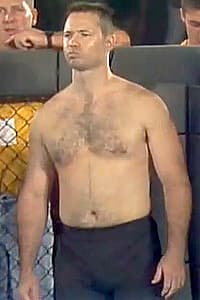
Open Weight · Submission · Neck Crank From Guard · R1 · 1:14
UFC - Ultimate Ultimate '95 · Dec 16, 1995
Submission
R1 · 1:14
Neck Crank From Guard

W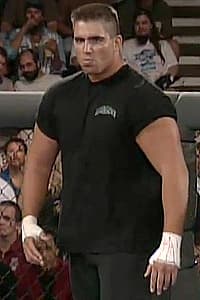
Open Weight · KO/TKO · Punches to Head From Half Guard · R1 · 1:53
UFC 6: Clash of the Titans · Jul 14, 1995
KO/TKO
R1 · 1:53
Punches to Head From Half Guard
L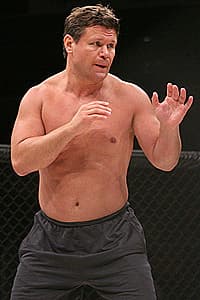
Oleg TaktarovTitle
Open Weight · Submission · Rear Naked Choke · R1 · 17:45UFC 6: Clash of the Titans · Jul 14, 1995
Submission
R1 · 17:45
Rear Naked Choke
W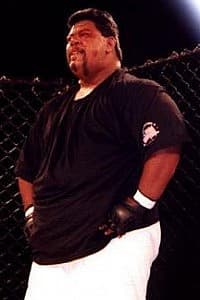
Open Weight · KO/TKO · Punches to Head At Distance · R1 · 0:20
UFC 6: Clash of the Titans · Jul 14, 1995
KO/TKO
R1 · 0:20
Punches to Head At Distance
Outside the UFC
across 7 bouts · 7 promotions · wins by 2 KOKOTC · Wargods/Ken Shamrock Productions · EliteXC · Cage Rage 21 · Strikeforce +2
| Res | Opponent | Outcome | Finish | Rd | Time | Promotion | Date |
|---|---|---|---|---|---|---|---|
| L | Ruben Villareal22-28-3 | KO/TKO | Punches | R2 | 2:06 | KOTC | Apr 13, 2013 |
| W | Mike Bourke10-16-1 | KO/TKO | Punches | R1 | 0:29 | Wargods/Ken Shamrock Productions | Feb 13, 2009 |
| L | KO/TKO | Punches | R1 | 0:43 | EliteXC | Feb 16, 2008 | |
| L | Gary Turner4-2-1 | KO/TKO | Punches | R1 | 2:31 | Cage Rage 21 | Apr 21, 2007 |
| L | Paul Buentello35-17 | KO/TKO | Punch | R1 | 0:43 | Strikeforce | Oct 7, 2006 |
| L | Hidehiko Yoshida9-8-1 | Submission | Single Wing Choke | R1 | 7:40 | PRIDE | Aug 28, 2005 |
| W | Wesley Correira21-16 | KO/TKO | Punch | R1 | 1:23 | ROTR 7 | May 7, 2005 |
Non-UFC bouts (regional/other promotions) — shown for context only, excluded from Schedule Score, striking/grappling rates, and every UFC-scoped metric.
In the news
All news →- Open Thread, July 28, 2026: Tanks, Muay Thai and Chickpeas!mmamania · Jul 28, 2026
- Zuffa Boxing wants Tank vs. Shakursherdog · Jul 28, 2026
- Dana White confirms interest in working with Gervonta ‘Tank’ Davis: ‘We’ve talked to them’mmafighting · Jul 27, 2026
- The story behind Khabib Nurmagomedov's legendary gas tanksherdog · Jul 15, 2026
- Dalton Rosta Dismisses Aaron Jeffery Part 3: “They Don’t Want to Tank My Stock to Give Him Another Opportunity”lowkickmma · Jul 8, 2026